Queensha Font: A Handwritten Touch That Elevates Real Small Business Branding
Last Tuesday, I was helping a local candle maker finalize her new soy wax jar labels—simple kraft paper sleeves with minimalist design, just her brand name and scent names. She’d been using a free script font from a Google Fonts alternative, but something felt “off”: the letters looked stiff, disconnected, like they were trying too hard to be elegant. When we swapped in Queensha, the change was immediate—not flashy, but *settled*. Like the brand had finally taken a deep breath and remembered who it was. That’s the quiet power of the right script handwritten font.
A Font That Feels Human—Not Just “Pretty”
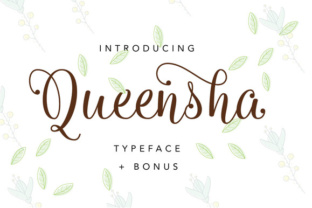
Queensha is a premium font from Ian Mikraz Studio, and what makes it stand out isn’t just its beauty—it’s its thoughtful duality. It blends the refined structure of copperplate calligraphy (think graceful entry strokes, controlled exits, and subtle contrast) with contemporary rhythm and spacing. The result? A script font that feels both intentional and effortless—like handwriting you’d trust to sign a wedding invitation or hand-letter a thank-you note to your favorite wholesale buyer.
It’s not overly ornate, so it doesn’t compete with your product photography or packaging texture. And it’s not so casual that it undermines credibility—especially important if you’re a skincare brand launching a new serum line or a boutique curating handmade jewelry tags. Queensha strikes that rare balance: warm enough for a neighborhood café menu, polished enough for a boutique’s embroidered hang tag or an online shop’s Instagram Story highlight cover.
Where Queensha Actually Shines in Everyday Business Use
We tested Queensha across six real small business touchpoints—and each time, it added cohesion without extra work:
- Product labels & packaging: On a 2 oz candle jar sleeve, Queensha’s clean letterforms stayed legible even at 10 pt size (with good contrast against kraft or cream backgrounds). Its natural flow made scent names like “Lavender + Cedar” feel evocative—not decorative.
- Menus & printed collateral: A café owner used Queensha for section headers (“Pastries,” “Specialty Drinks”) over a clean sans serif body font. Customers noticed the warmth instantly—no one said “nice font,” but several commented, “This place feels so put-together.”
- Digital graphics: For Instagram templates and Etsy banner images, Queensha scaled beautifully. Unlike some script fonts that blur or pixelate on mobile, its vector outlines held crisp detail—even in tiny thumbnails or Pinterest pins.
- Thank-you cards & stickers: Because Queensha includes standard ligatures and stylistic alternates (like a swash “Q” or connected “th”), personalization felt easy—no design degree required. One floral shop printed “With love, [Name]” on seed paper cards and got repeat requests for the card itself.
- Logo accents & monograms: While Queensha works best as a display font—not for long paragraphs—it’s ideal for logo lockups where you want elegance without stiffness. Paired with a light-weight sans serif for the tagline, it created instant visual hierarchy.
Smart Pairings & Practical Tips for Non-Designers
You don’t need to be a typographer to use Queensha well. Here’s what worked consistently:
Pair it with a friendly, neutral sans serif—think Montserrat Light, Poppins Regular, or even Open Sans. These fonts let Queensha lead while keeping body text highly readable. Avoid pairing it with other scripts or heavy serifs; Queensha needs breathing room to shine.
Use it intentionally: Queensha excels at short, high-impact text—brand names, product titles, quote highlights, greeting cards, social media headlines. Skip using it for ingredient lists, shipping policies, or multi-line addresses. Save it for moments where you want customers to pause, feel, and remember.
For small labels or embroidery mockups, stick to uppercase or title case—lowercase “a” and “e” have delicate counters that can close up when scaled down. And always preview in context: print a test label, zoom into your Instagram template at 100%, hold your phone at arm’s length. Queensha holds up—but only when given the right space and contrast.
Licensing, Files & What You’ll Actually Get
Queensha is a commercial font, meaning it’s fully licensed for use on physical products (candle jars, tote bags, tea boxes), digital templates (Canva, Adobe Express), client work, and even resale items like printable planners—no hidden restrictions. It comes in OTF and TTF formats, includes OpenType features like discretionary ligatures and stylistic sets, and supports basic Latin multilingual characters (great for bilingual café menus or Canadian/Mexican makers).
Before downloading, double-check that your version includes the full character set—not just the demo. Some marketplaces offer limited subsets. And while Queensha has no bold weight (it’s designed as a single expressive style), that’s part of its charm: consistency over complexity. Let your layout, color, and spacing do the emphasis work instead.
If your brand voice is grounded, sincere, and quietly confident—whether you’re hand-pouring candles in Portland, baking sourdough in Asheville, or designing ceramic mugs in Lisbon—Queensha won’t shout for attention. It’ll simply make everything you create feel more like *you*: considered, human, and unmistakably yours.