Montellia: A Handwritten Font That Builds Trust for Small Businesses
If you're a small business owner—whether you run a cozy café, craft handmade candles, sell skincare online, or coach clients one-on-one—you know how much your visual identity matters. Customers don’t just buy your product or service; they buy into the feeling your brand gives them. And one of the quietest, most powerful tools in that equation is your font choice. Montellia isn’t just another Script Handwritten typeface—it’s a thoughtful, expressive brush-style font designed by StudioRz to bring warmth, authenticity, and polish to real-world business materials.
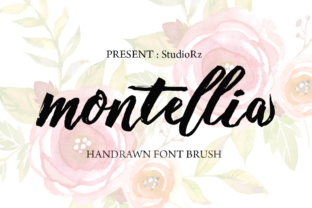
Montellia feels like handwriting with intention: fluid but controlled, personal but professional. Its strokes carry gentle variation—thick downstrokes, soft tapered ends, subtle bounce—giving it rhythm without sacrificing clarity. It’s not overly ornate or fussy, which means it works where many decorative fonts fail: on a tiny product label, a mobile-optimized Instagram story, or a printed thank-you card tucked inside a shipping box. That balance is why Montellia stands out among modern typography options for small businesses who need both personality and practicality.
Where Montellia Fits in Your Brand Touchpoints
You don’t need to overhaul your entire brand to benefit from Montellia. Start small—and smart. Use it where human connection matters most:
- Logos & shop signage: Pair Montellia with a clean sans serif (like Inter or Montserrat) for contrast—Montellia as your business name, the sans serif for taglines or contact info. A local bakery named “Hearth & Honey” would feel inviting and grounded using Montellia for the logo, while keeping hours and address legible in a supporting font.
- Packaging & product labels: Montellia shines on jars, boxes, and hang tags. Its natural flow complements organic, artisanal, or wellness-focused brands—think lavender soap, small-batch hot sauce, or soy wax candles. Just keep body text (ingredients, weight, usage notes) in a highly readable sans serif or serif font.
- Social media graphics: On Instagram or Pinterest, Montellia adds charm to quote cards, seasonal promotions, or behind-the-scenes posts. Use it for headlines only—not long captions—so it stays crisp even at thumbnail size.
- Websites & email headers: Apply Montellia sparingly: hero section headlines, section dividers, or CTA buttons (“Join the List”, “Book Your Session”). Avoid body copy—stick to a web-safe, accessible font there.
- Printed materials: From café menus to boutique gift receipts or workshop handouts, Montellia adds tactile warmth. Print a test sample first: check how it renders at 10–12pt on uncoated paper or kraft stock—it holds up better than many script fonts at small sizes.
Consistency Without Compromise
One of the biggest challenges for small businesses is looking cohesive across platforms—especially when you’re designing everything yourself. Montellia helps solve that. When used intentionally (e.g., always for your business name, always in the same color and weight), it becomes a quiet anchor in your brand identity. Customers begin to recognize that distinctive flow—even before they read the words. That recognition builds trust over time.
It’s also versatile enough to reflect different moods within the same brand. A wellness coach might use Montellia in soft charcoal for calm, nurturing content—and switch to deep terracotta for limited-edition offer banners. The font remains unmistakably *theirs*, but the tone shifts naturally with color and layout—not with a new typeface every time.
Smart Pairing & Realistic Testing
Montellia works best as a display font—not your everyday workhorse. Think of it as your brand’s voice: expressive, intentional, human. Then choose a supporting font that handles the heavy lifting: clear, neutral, and highly legible. A friendly sans serif (like Poppins or Lato) is often the safest, most flexible pairing. For print-heavy businesses—like stationery shops or letterpress studios—a warm serif (such as Merriweather or Cormorant Garamond) can add quiet sophistication alongside Montellia’s energy.
Before committing, test Montellia in context:
- Mock up your logo on a white mug and a kraft box—does it hold presence without bleeding or thinning?
- Try it in Canva or Figma over a busy background photo—is it still readable at 24px?
- Export a PDF of your menu or product label and zoom to 150% on your phone. Does spacing feel balanced? Are letters distinct?
If something feels off, adjust tracking (letter spacing) slightly—Montellia benefits from a touch more air between characters in smaller sizes or tighter layouts.
Licensing Matters—Especially for Sellers
As a small business owner, you’ll likely use Montellia beyond digital mockups: on physical products, packaging, templates you sell, or client deliverables. Make sure you’ve licensed Montellia for commercial use. StudioRz offers clear licensing terms—check whether your plan covers merchandise, resale templates, or SaaS platforms if those apply to your workflow. Skipping this step could mean redesigning later—or worse, receiving a takedown notice. It’s a small upfront check that protects your time, reputation, and revenue.
At its core, Montellia is more than a Fonts download. It’s a design asset that supports your story—not overshadows it. It invites customers in without shouting. It says “handmade,” “thoughtful,” and “here for you”—not “generic” or “mass-produced.” Whether you’re printing 10 labels or 10,000, launching your first website or refreshing a five-year-old brand, Montellia gives your visuals a consistent, confident voice. And in a crowded marketplace, that quiet consistency is exactly what makes people pause, remember, and return.